
Seminole County Recent Arrest Channels
Two SCSO channels carry new Seminole County bookings. The Daily Booking Report archive stores dated public reports. The Custody Portal is the live inmate search. One looks back, while the other shows right now. The report covers who entered booking during its stated dates, and the roster shows who sits in JEPCF custody at the moment of a search. Booking, release, and publishing run on different clocks. A name can appear in one and not the other because of that gap.
| Official view | Best use | Timing and photos |
|---|---|---|
| 24 Hour Arrests | Latest scheduled booking report | Weekday posting, with weekends generally folded into Monday; photos are not promised in the PDF |
| Arrest Log | Dated reports across several days | Archive pagination and combined-date reports; no guaranteed online retention period |
| Current roster | Present JEPCF custody, charges, and bond notation | Current-inmate results may include a booking photo; former entries can leave the live roster |
The official SCSO booking-report page shows how dated reports are listed for public access.
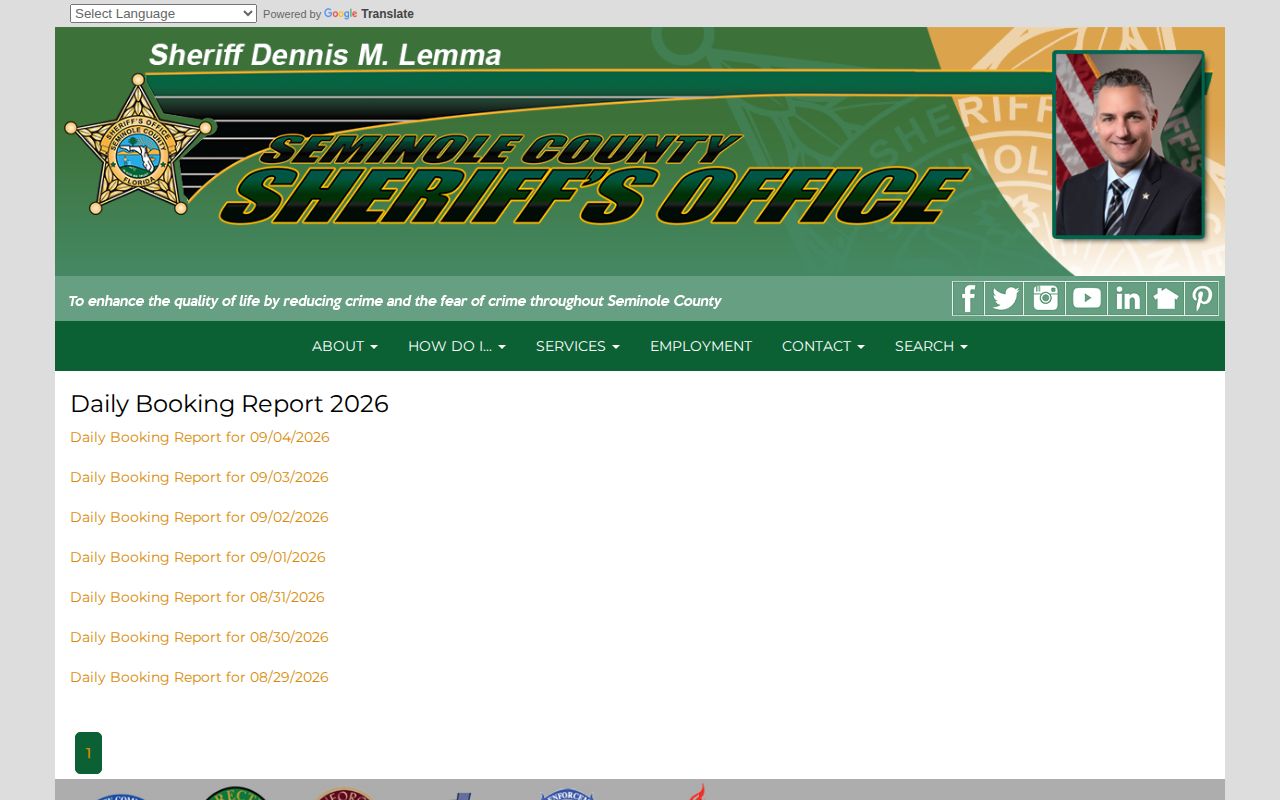
Match a report's printed date to its booking window, not to the day you happen to search.
When New Seminole Arrests Post
The Seminole County Sheriff's Office posts its arrest report on weekdays. It usually goes up around 8 a.m. Each PDF covers bookings from midnight of the prior business day through the overnight hours. Monday's edition sweeps in the whole weekend. That cadence creates a familiar gap. Someone booked at the John E. Polk Correctional Facility can appear on the live roster well before the next PDF exists. An arrest made after the cutoff simply waits for the following posting. The department makes no promise of minute-by-minute updates.
Searching for a person arrested last night? Start with the newest dated report. Then check the live roster. If the name never surfaces, verify the spelling and date of birth. Booking takes time. The same-day arrest page lays out the sequence in detail. For tracking a later release or transfer, the VINELink custody check is the right tool. Municipal agencies, juvenile rules, open investigations, and transfers can all keep an arrest off the public list.
Search the Seminole Jail Roster
The John E. Polk Correctional Facility is the county's booking center. SCSO lists its capacity at 1,396. The agency says it handles more than 20,000 bookings a year. Those numbers describe scale, not today's head count. JEPCF holds several groups of detainees. They include people awaiting trial, people serving misdemeanor sentences, people awaiting state transfer, and some federal pretrial detainees.
| Search or result field | How to use it |
|---|---|
| Name | Try the legal spelling and narrow carefully when names are shared. |
| Date of birth | Distinguishes people with similar names when the portal accepts or displays it. |
| Booking number | Identifies the specific jail intake rather than the person in general. |
| Booking date | Separates a new arrest from an older custody event. |
| Charge and statute | Shows the charge as booked. |
| Bond notation | May change; a $0 entry can mean no bond, release, or sentenced status. |
| Arresting agency | Shows whether SCSO or a municipal police department made the arrest. |
- Open the official SCSO WebBond page and choose “Search for Current Inmates.”
- Search with the most exact name or identifying detail available.
- Match the booking date, agency, and booking number before relying on a result.
- Read every charge and hold line. One no-bond charge can control even when another line lists a bond.
- Confirm court disposition with the Clerk rather than treating the roster as a case outcome.
The official current-inmate portal is designed for a neutral name-based custody lookup.
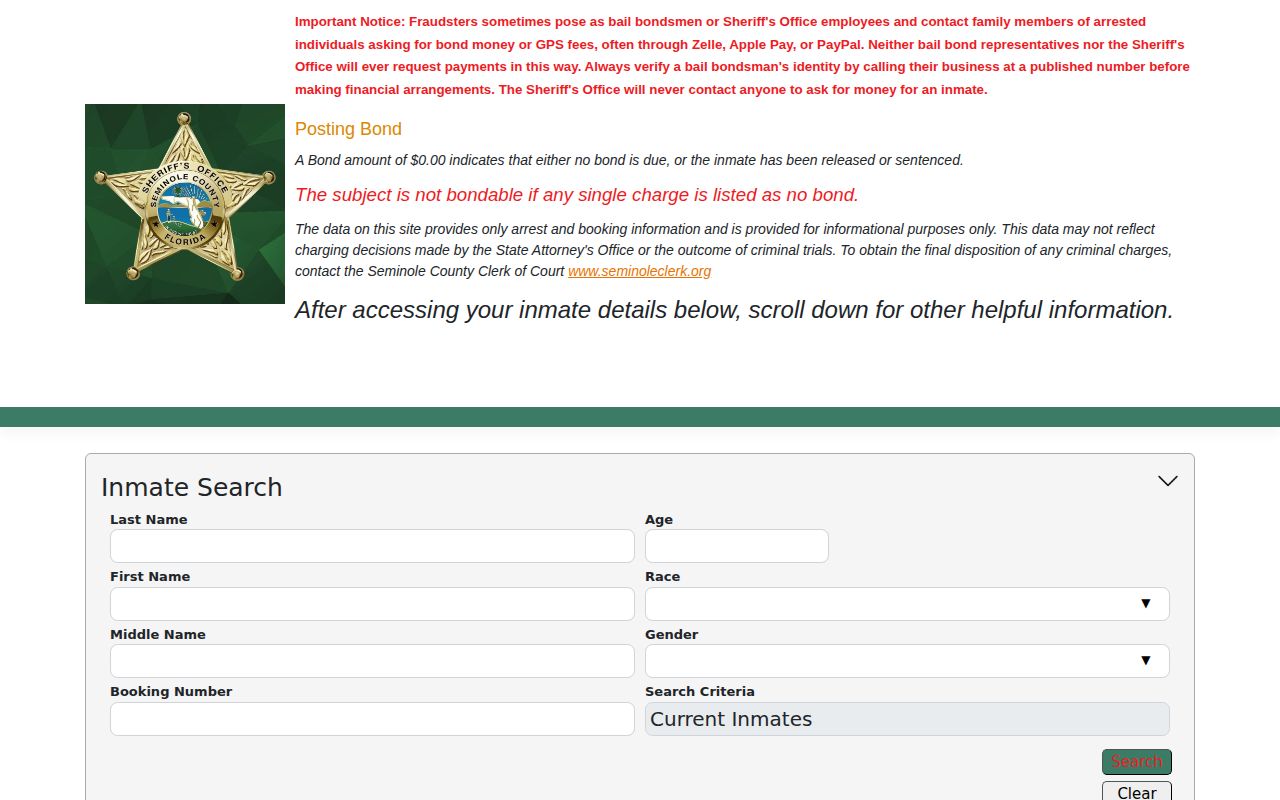
Treat this search as a live custody check, not a full archive of past bookings.
Where Seminole Bookings Are Published
Official sources come first, ahead of news or private databases. SCSO publishes the roster and the dated booking reports. A city police department keeps its own incident and arrest reports. The Clerk holds the court case and its disposition. SCSO offers no mobile app for the roster or booking photos. The 24-hour email subscription is the only official booking alert. Ring Neighbors and CommunityConnect cover broader community notices. They are not a jail feed.
| Channel | Official? | What it adds |
|---|---|---|
| SCSO roster and reports | Yes | Current custody and dated booking data |
| City police records | Yes | Municipal incident or arrest narrative |
| Seminole Clerk | Yes | Case filings, pretrial information, and disposition |
| Sanford Herald, ClickOrlando, WESH, WFTV | No, news | Selective reporting on newsworthy events |
| Busted Newspaper, RecentlyBooked, Mugshots.com, Arrests.org, and Mugshots Zone | No, private | Secondary indexes that may be stale, incomplete, or retained longer |
Private county pages can help pin down a date or spelling. They set their own update cycles, though. A copied charge is not proof of conduct. Recheck the SCSO source and the Clerk record. The monthly SCSO crime maps are separate too. They plot selected Part I offenses in unincorporated Seminole County and show the first or most serious offense, not a tally of recent arrests.
News plays a narrower role. The Sanford Herald posts selected Arrest Reports. ClickOrlando, WESH, and WFTV cover stories they deem newsworthy. A story can add an agency statement, scene detail, or a later development that a booking sheet lacks. No outlet can confirm that every person arrested on a given day was booked at JEPCF. Coverage may land after a case has changed. Read the story date, name its source agency, then return to the official custody and court channels.
Seminole Recent Arrests by City
City police records and county custody records answer different questions. A city officer may write the arrest report. JEPCF then takes the person in, and SCSO publishes the booking. The arresting-agency field links the two files. It keeps a city name from being mistaken for the place of custody.
- Sanford Recent Arrests: Sanford Police records, local reporting, and the JEPCF booking route in the county seat.
- Altamonte Springs Recent Arrests: the city Records Section, CityProtect incident map, and county custody check.
- Oviedo Recent Arrests: intermittent city incident releases, NextRequest records access, and SCSO custody.
Someone arrested in one city can be held somewhere else during a special operation. Oviedo incident material shows why. City, arresting agency, and jail each need separate verification. JEPCF's housing of some federal inmates likewise proves no ICE arrangement and creates no municipal roster.
Read a Seminole Booking Record
The public report and roster both expose an intake record. Booking is the jail's process. It records the person and identifiers. The alleged offense, property, and custody terms appear after an arrest. The State Attorney can change or drop a charge. The court record supplies the disposition, meaning the final result in the case.
| Field | What it means |
|---|---|
| Name and descriptors | Identity details entered at intake, including DOB and physical descriptors. |
| Booking and arrest dates | Separate dates when arrest and jail intake did not occur at the same moment. |
| Booking and incident numbers | References for the jail intake and agency event. |
| Arresting agency | The office responsible for the arrest report. |
| Count, description, statute | The charge as entered at booking. |
| Bond or hold | Release conditions or a restriction that can change after court review. |
| Booking photo | An identification image tied to intake, never evidence of guilt. |
A $0 bond line is not a release signal. The portal itself warns that the figure can mean no bond, a release, or a sentenced status. One no-bond count can override a count with bond. Bond is a court-set release condition. It is not a fine and not a case result. When the distinction matters, confirm it with JEPCF or the Clerk's Pre-Trial Release Register.
Seminole Mugshots and Booking Photos
The Media Resources policy from the Seminole County Sheriff's Office splits booking photos into two groups. Someone locked up right now at the John E. Polk Correctional Facility has a photo tied to the current-inmate search. You can pull it up with a name or a date of birth. Former inmates take a different route. Their booking photos come from the Public Information Unit by request. The sheriff's office makes no promise about how long any arrest photo stays viewable online. The dated booking PDF is a list, not a picture feed, so treat it accordingly.
An arrest in Seminole County can also land someone in state prison. For that, the Florida Department of Corrections offender search is the right tool. An FDC profile may show a photo taken after transfer. It is not always the original booking photo from the county jail. The federal Bureau of Prisons locator offers no inmate photos at all. There is no mugshot gallery hosted here, and booking photos are never rehosted for browsing.
Request a Seminole Booking Record
Central records at SCSO handle agency incident reports and traffic crash records. They also process record changes tied to sealing, expungement, or identity theft. The SCSO Public Records page lists the current request channels, fee categories, and exemption notice. Name the exact item. A booking sheet is not an arrest report. The incident narrative, body-camera video, and booking photo are separate records too. Each can carry a different custodian or cost.
- Identify the arresting agency from the booking entry.
- Collect the full name, arrest or booking date, booking number, and incident number when known.
- Request the specific record from SCSO or the municipal agency that created it.
- Ask for an estimate before work begins if the request is broad or includes media.
- Use the Seminole Clerk case search to obtain the later filed charge and disposition.
A narrow request is easier to route and price.
City rules differ from SCSO's. Fees and release rules in Sanford, Altamonte Springs, or Oviedo are not automatic matches, so send each report to the correct city office.
Florida Arrest Records Law
placeholder
Florida Statutes Chapter 119 builds the public-records framework for the state. Broad access still has limits. Exemptions apply at specific points. Juvenile material is generally restricted. Active investigative information can be withheld, and protected personal details may arrive redacted. Altamonte Springs, for one, limits juvenile arrest-report access to felony matters and releases incident reports only once investigations close. A blank portal result is not proof that no law-enforcement action took place.
Florida's records schedule separates retention from web visibility. Under the cited GS2 schedule, booking records, commitment and release lists, and inmate incarceration records carry a one-anniversary-year minimum after release. Jail docket books are permanent. Agencies may hold material even longer. None of that keeps a live roster entry online. Older arrests can still be requested through SCSO, the arresting city, or the Clerk. For deeper history, the UCF/RICHES Seminole County Jail Records collection preserves a 1926-1939 ledger, with 1940-1946 material available by request.
That old ledger is detailed. Entries hold name, age, and physical description. So do the committing officer, alleged crime, sentence, and destination. It gives Seminole County a real archival trail. But modern JEPCF records do not automatically flow into the same collection, and online access, legal retention, and archival preservation remain three separate stages. For an older arrest, ask the agency for the record series and date range first. If a significant series was transferred, the Florida State Archives catalog and its reference staff can pinpoint the collection, box, or folder you need.
Correcting Old Seminole Listings
Start with the custodian. Wrong SCSO data goes to SCSO Records. If a court sealed or expunged the case, get the order and send it to every agency and publisher holding a copy. Florida's FDLE process starts with a Certificate of Eligibility and a court petition, and FDLE warns that certificate processing can exceed 12 weeks. The Seminole Clerk also posts a local checklist. Expungement is a court process that limits qualifying records. It is not an instant deletion command for every copy floating around the internet.
Florida Statutes section 901.43 bars covered publishers from soliciting or accepting payment to remove booking photographs and sets a documented request process. Skip paid removal services. Busted Newspaper, RecentlyBooked, Mugshots.com, and Mugshots Zone each offer a free correction or record-maintenance route for stated grounds like error, sealing, expungement, dismissal, duplicate entry, or wrong identity. The rules differ site to site. Arrests.org posts no clear free-removal promise for Seminole listings.
Fix the source before worrying about a search snippet. Once a publisher removes or changes a page, Google's Refresh Outdated Content process can update the result or its cached snippet. That tool will not erase a live publisher page. Keep copies of the record URL, your request, the supporting order, and the response.
Seminole Arrest Warrants and Wanted Status
The Seminole County Sheriff's Office handles warrants and fugitive apprehension. Its Domestic Security page describes that duty in plain terms. What the office does not publish is a public warrant-search portal. There is no current most-wanted list either. The 18th Judicial Circuit runs an electronic warrant workflow. That internal court process never reaches the public as a browsable list. The Clerk's criminal case search can show case activity tied to an arrest. Still, it won't give a live answer on any single warrant.
For a direct status question, call SCSO's non-emergency line. Records staff and the Clerk's criminal division can also help. Think a warrant carries your own name? An attorney is the right stop. Never approach someone you believe is wanted. Tips belong with an official law-enforcement channel. A warrant only orders one thing. The person named must be brought before the court. The current jail roster, remember, is not a wanted list.
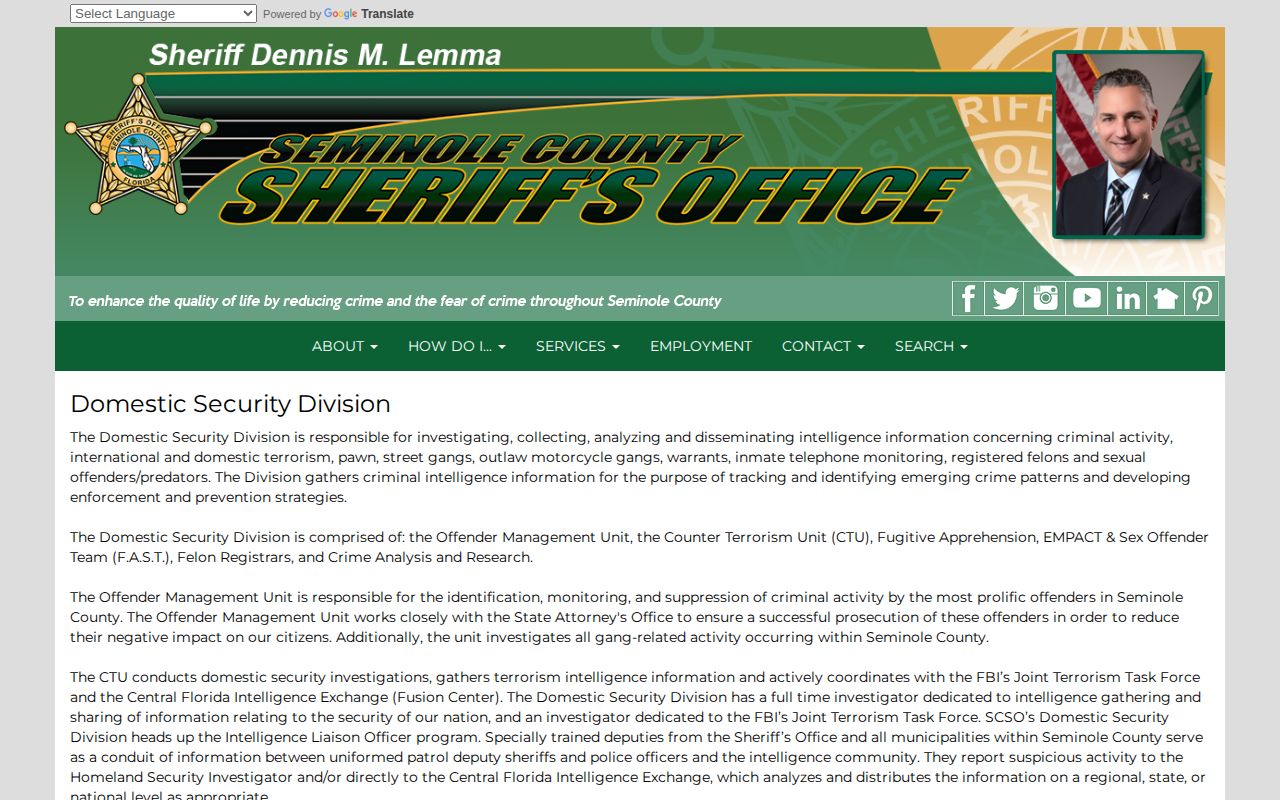
This agency page covers responsibilities and contacts, not a searchable list of wanted people.
After a Seminole County Arrest
A jail roster only shows who was just booked. The case that follows lives elsewhere. The Seminole County Clerk search covers both. Look for Criminal Cases and the Pre-Trial Release Register there. That second check matters, because the portal warns that booking data may not match the State Attorney's filing decision. Charges can be dropped or never filed.
Then comes a first appearance. This prompt hearing advises an in-custody defendant of the matter and any release conditions. The 18th Judicial Circuit manual runs these on a 24-hour cycle. It lists JEPCF sessions at 2 p.m. on weekdays and 9 a.m. on weekends and holidays. SCSO's media page gives 1:30 p.m. on weekdays. Because those official times conflict, confirm the schedule with the court before attending.
Custody Beyond Seminole Arrests
County jail custody is only one layer. The Florida Department of Corrections search tracks state prison and community supervision, not fresh JEPCF bookings. Turn there after a state sentence or transfer. The federal Bureau of Prisons locator lists people in BOP custody but shows no photos. Immigration custody uses the separate ICE Online Detainee Locator. Match names and identifying details in every system.
JEPCF houses federal inmates awaiting trial, the facility says. That fact alone proves no ICE contract. It also promises no BOP listing and creates no federal booking-photo source. Check whichever authority the custody record names, then use that agency's locator. For county and state custody events, VINELink can send status alerts. It is not a court record. It also can't replace the official photo routes.
Seminole County Sheriff’s Office Location and Directions
Public Record Search
Sponsored Results